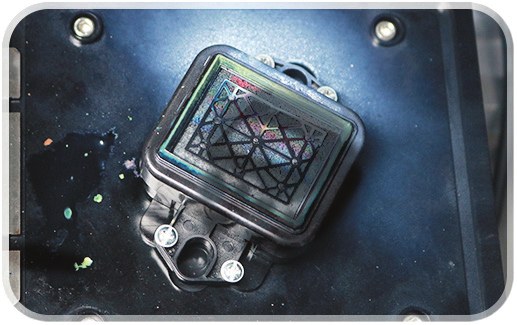
Known brand heads
i3200 A1 heads in a front and back arrangement, with a head moisturising function.
Print on film, powder it, cure it, press it. DTF puts a full colour print on cotton, polyester, denim, nylon, leather and canvas with no screens and no minimum order.
DTF, or direct to film, is a garment printing process where the design is printed in CMYK plus white onto a PET film, coated with hot melt powder, cured, and then heat pressed onto the garment. Because there is no screen and no plate, a 1-piece order costs the same to set up as a 100-piece order. DTF works on cotton, polyester, denim, nylon, leather and canvas, which is why a unit with a mixed catalogue can cover most of it with one machine. The global direct to film printing market was valued at USD 2.7 billion in 2024 and is forecast to reach USD 3.9 billion by 2030, according to Grand View Research.
CMYK first, white behind it, straight onto PET film at 2400 DPI. No screen, no plate, no setup cost.
The shaker lays hot melt powder on the wet ink and returns the excess automatically, so powder does not sit where it should not.
Preheating, intermediate heating and after heating in one pass. The film comes out dry and ready to store or press.
Heat press onto the garment and peel. Works on cotton, polyester, denim, nylon, leather, canvas and swimwear fabric.
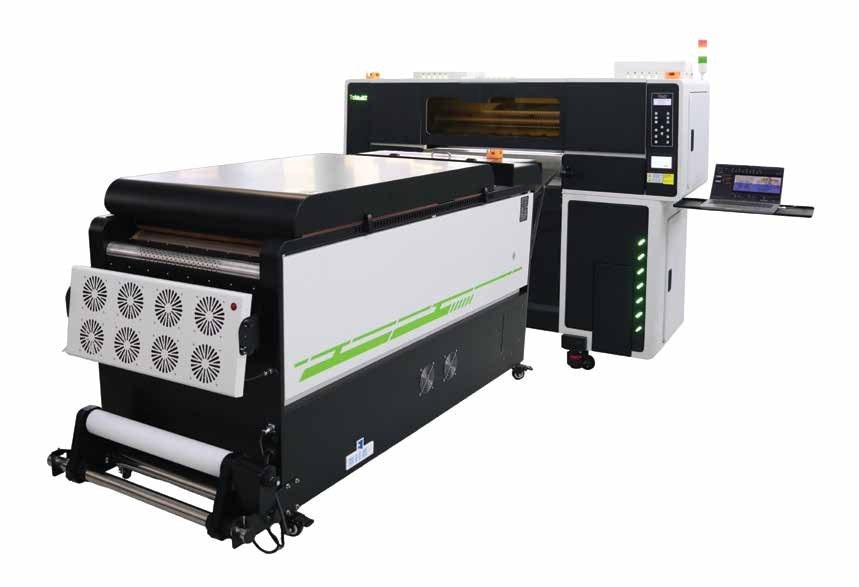
6 heads, 600 mm wide, printer and shaker as one line. This is the model most garment units buy when job work stops keeping up with their orders.
| Model | Nexus 600 6H |
|---|---|
| Print head | i3200 A1, 6 pcs |
| Printing speed | 4 pass: 27 sqm/h. 6 pass: 23 sqm/h. 8 pass: 15 sqm/h |
| Ink type | Pigment |
| Ink capacity | 3 L |
| Ink colour | C.M.Y.K plus White |
| Printing width | 600 mm |
| Printing medium | PET film |
| Printing resolution | 2400 DPI |
| Curing | Fan LED light |
| Working conditions | 25°C to 30°C, 50% to 75% humidity |
| RIP software | Photoprint |
| File formats | TIFF, JPEG, EPS, PDF |
| Printer dimensions | 1890 x 1800 x 890 mm |
| Printer weight | 305 kg net, 418 kg gross |
| Shaker dimensions | 2680 x 1020 x 1120 mm |
| Shaker weight | 288 kg net, 362.5 kg gross |
| Power | Printer 220V/110V, 2200W, 10A. Shaker 220V, 7000W, 35A |
i3200 A1 heads in a front and back arrangement, with a head moisturising function.
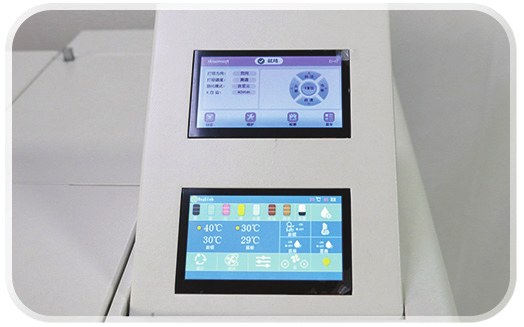
Set and read the temperature on screen, so your operator does not guess the curing.
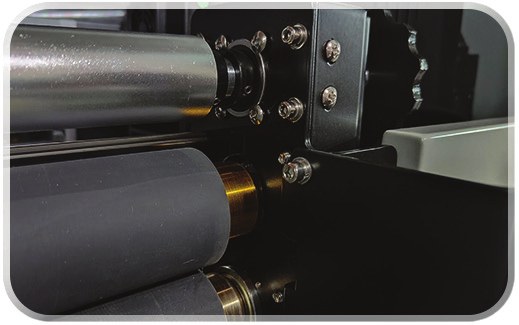
Double roller tension keeps the film straight, so long runs stay in register.
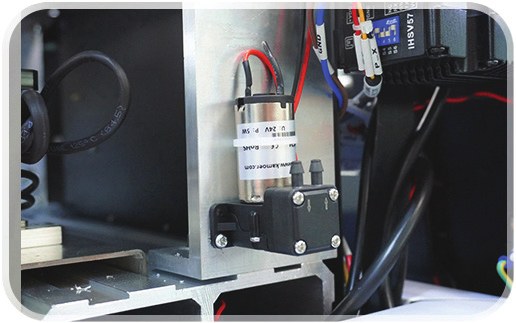
Patented powder return in the shaker, patent no. 202022079915X. Less waste, cleaner film.
Need a different width or head count? We stock 21+ machine models. Ask for the DTF model list with prices.
Ask for the model list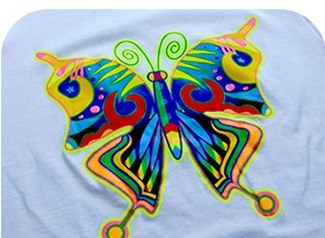
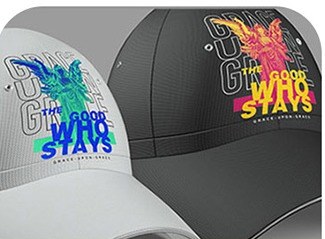
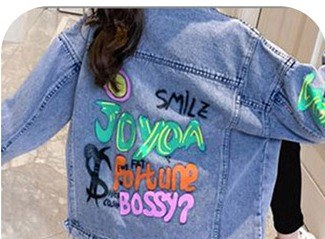
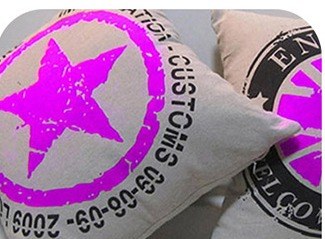
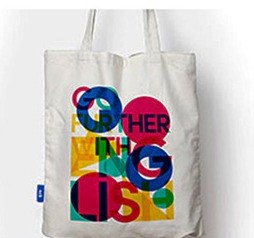
T-shirts, hoodies, denim clothing, caps, canvas bags, cushions, uniforms and sportswear. India's custom t-shirt printing market alone reached USD 176.6 million in 2025 and is projected to reach USD 407.9 million by 2034, per IMARC Group.
Support starts on the call, not on the visit. Ring us in working hours and an engineer takes your operator through it live, on phone or on video, while the machine is in front of him. Most stoppages clear on that call. When it needs hands on the machine, an engineer travels: 24 to 48 hours, same day or next day in metro and tier 1 cities, up to 3 days for remote locations, from a team of 48 people across 11 cities.
Call in working hours and an engineer diagnoses it with you on the spot, over phone or video. For a unit with a shipment tomorrow, even 24 hours is too long to wait, so the first fix attempt happens now.
For anything the call cannot fix. Same or next day in metro and tier 1 cities. Up to 3 days remote. 48 people across 11 cities.
Your operator sends a nozzle test to our group every morning. We catch a clogged head before it becomes a stopped machine.
We install the machine and run your own designs on your own material, so you see the real output before you sign off.
Ink, film, powder, heads and spare parts stay in stock here. Buying the machine in India means you can keep running it in India.
DTF, TPU label, embroidery and flocking are all supported by the same engineers on the same terms. You do not chase 4 suppliers.
A DTF printer prints the design in CMYK with a white layer behind it onto a PET film. The film passes through a shaker that applies hot melt powder and returns the excess, then through a curing unit. The finished film is heat pressed onto the garment and peeled. The whole process needs no screen, no plate and no minimum order quantity.
Cotton, polyester, denim, nylon, leather, canvas, chemical fibre, swimsuit fabric, diving suit material and PVC all accept a DTF transfer. That range is the main reason a garment unit with a mixed catalogue buys DTF rather than a fabric-specific process.
The Nexus 600 6H runs about 27 square metres per hour at 4 pass, 23 at 6 pass, and 15 at 8 pass, at 2400 DPI. Plan your daily capacity on the pass setting you sell at, not on the peak figure.
PET film, hot melt powder, and pigment ink in CMYK plus white. All 3 stay in stock with us in India, along with replacement print heads and spare parts.
One trained operator runs the printer and shaker line. A second person on the heat press keeps output moving. Our engineer trains your operator during installation.
The printer takes about 2200W at 10A on 220V or 110V. The automatic shaker takes about 7000W at 35A on 220V. Arrange both points before delivery so installation is not held up.
Our sales team calls you back with the price, the delivery time and the document list your bank asks for.
Price, delivery time, installation date and loan documents.