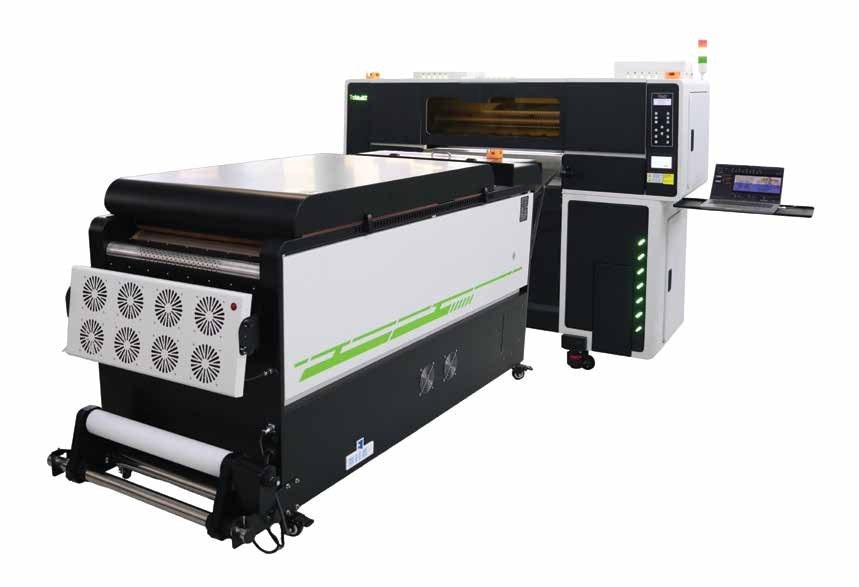
DTF, 600 mm
Nexus 600 6H
6 i3200 A1 heads, 2400 DPI, CMYK plus white on PET film. 27 sqm per hour at 4 pass. Printer and shaker come as one line with automatic powder return.
Full specificationA customisation order does not behave like a production order. In the customer's own words: I need them by this date, in two or three days, and I need personalisation, at this price. Axis supplies machines that carry a design straight from a file to a garment, a bag, a cap or a label, with no plate and no setup charge when the name on it changes.
Orders got smaller. Designs got more. The dates got shorter. Everyone who decorates fabric in India is being asked to do the same work in smaller lots, with more design changes, on tighter dates, at last year's price. Most floors are running equipment that was built for the opposite of that.
A customisation or personalisation business needs a process with no plate cost and no minimum order, because its orders arrive as single pieces with a short deadline. DTF printing covers full-colour designs on cotton, polyester, denim, nylon, leather and canvas, including white ink on dark garments. TPU and PU label printing covers raised brand labels and badges for bags and shoes. Digital embroidery covers caps, jackets and uniforms. Axis Enterprises supplies all 4 across India, priced from 3 lakh to 16 lakh depending on print width and head count. Live phone and video support runs during working hours, so a machine that stops on a Friday afternoon gets diagnosed that afternoon, and an engineer is on site in 24 to 48 hours from a 48-person service team across 11 cities.
4 things. The blank is not one of them.
Your margin lives in the personalisation, not in the blank. Any process that charges to change a name takes that margin before you have taken the order.
The enquiry lands Friday evening, the event is Tuesday, 350 pieces, 3 different logos. You either own the process or you spend the weekend hoping.
The customer wants to see it before confirming. If the answer to that message is 2 days away, the order goes to whoever answers with a photo tonight.
One wrong spelling costs the blank, the courier both ways and the promised date. Nobody splits that cost with you.
The published numbers say yes. Demand is growing faster than the average floor is adding capacity, and the growth is arriving in small lots.
Global direct to film printing market in 2024, forecast to reach USD 3.9 billion by 2030 at a 6.0% CAGR, according to Grand View Research.
India's custom t-shirt printing market grew to USD 176.6 million in 2025 and is projected to reach USD 407.9 million by 2034, per IMARC Group.
India's domestic textile and apparel market in 2025, projected at USD 350 billion by 2030, with over 45 million people employed in the sector, per IBEF, February 2026.
A market compounding at 9.75% a year while your capacity stays flat does not wait for you. The volume goes to whoever can answer first, and it usually stays there.
Price the order, not the print. These 7 lines are where a personalisation business either makes its margin or gives it away.
| 1. The blank | The garment, bag, cap or label itself. Usually the only line most people count. |
|---|---|
| 2. Artwork time | The minutes spent fixing a customer file, resizing and placing it. On a 1-piece order this line is often larger than the ink line. |
| 3. Purge and startup | The ink spent before the first saleable print of the day. It is a fixed cost per shift, so a single-piece day carries all of it. |
| 4. Ink, film and powder | Per square metre at your production setting. Small designs waste proportionally more film on lead-in and trim. |
| 5. Press and finish | Load, press, peel, fold, pack. The labour minute does not shrink because the quantity is 1. |
| 6. Rejection and reprint | Your honest error rate on names and spellings, priced in. A personalised reject cannot be resold to anyone. |
| 7. The speed itself | A 3-day delivery is a service you are selling. If your rate card does not charge for it, you are giving away the one thing your competitor cannot copy. |
Your business is answering fast at quantity 1. Compare on that, in this order.
| 1. Cost of a design change | It should be zero. Anything else is a tax on your entire business model. |
|---|---|
| 2. Time from artwork to finished piece | Ask for the real clock time on a single piece, from opening the file to a packed product. |
| 3. White ink on dark fabric | Most personalisation sells on black and navy. See it printed on a dark garment before you decide, not on white cotton. |
| 4. Substrate range | One machine that covers apparel, caps, bags, canvas and labels lets one order book carry another when a season slows. |
| 5. Hours to an engineer | In this business a dead machine on a Friday is a dead weekend of committed orders. Ask whether you can get a live engineer on the phone that afternoon, not just a visit next week. |
| 6. Consumable supply and price | Ink, film and powder for the next 3 years, from whom, at what price. |
| 7. Sampling before payment | Your artwork, your blanks, before the balance is released. |
Support starts on the call, not on the visit. Ring us in working hours and an engineer takes your operator through it live, on phone or on video, while the machine is in front of him. Most stoppages clear on that call. When it needs hands on the machine, an engineer travels: 24 to 48 hours, same day or next day in metro and tier 1 cities, up to 3 days for remote locations, from a team of 48 people across 11 cities.
Call in working hours and an engineer diagnoses it with you on the spot, over phone or video. For a unit with a shipment tomorrow, even 24 hours is too long to wait, so the first fix attempt happens now.
For anything the call cannot fix. Same or next day in metro and tier 1 cities. Up to 3 days remote. 48 people across 11 cities.
Your operator sends a nozzle test to our group every morning. We catch a clogged head before it becomes a stopped machine.
We install the machine and run your own designs on your own material, so you see the real output before you sign off.
Ink, film, powder, heads and spare parts stay in stock here. Buying the machine in India means you can keep running it in India.
DTF, TPU label, embroidery and flocking are all supported by the same engineers on the same terms. You do not chase 4 suppliers.
6 i3200 A1 heads, 2400 DPI, CMYK plus white on PET film. 27 sqm per hour at 4 pass. Printer and shaker come as one line with automatic powder return.
Full specification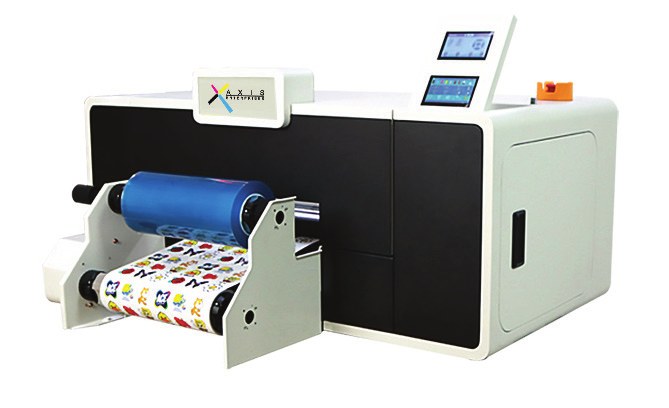
HD 3200 head, 2400 DPI, CMYK with white and varnish on TPU or PU. Adjustable ink thickness for a raised label. Runs on a 700W single phase point.
Full specificationWe stock 21+ machine models across widths and budgets, priced from 3 lakh to 16 lakh. Tell us your daily output and we will name the one that fits, including the one you should not buy.
Buyers who reorder are the only review that costs the reviewer something.
"We are using 3 machines of Axis Enterprises from last 5 years. Whenever we had any problem they took care of it right away. We feel Axis Digital Printing Machines are value for money with good after-sales service."
Kashyap ModiPromoz, Kolkata"I visited Axis office in Ludhiana to see DTF machine, the experience was great. I am happy with my decision to buy the machine and I would highly recommend them to anyone."
GauravSau Group, Surat"I am using Axis Machines since 2015 and few months back I got the latest DTF machine to expand my printing business. I would definitely say Axis DTF machine is best in market."
DeepakAkriti Enterprises, DelhiYes, if you price the order and not the print. A DTF line has no plate and no setup charge, so the cost of changing a name is zero. The lines that decide your margin on a 1-piece order are artwork time, the daily purge and the labour minute, which is why a rate card built only on ink loses money at quantity 1.
Yes. The machine lays white ink under the colour, which is what lets a full-colour design sit on black, navy or a printed base. Ask to see your own artwork printed on a dark garment before you buy, since white ink behaviour is the real difference between machines in this price band.
Cotton, polyester, denim, nylon, leather and canvas all take a DTF transfer, which covers hoodies, caps, tote bags, sportswear, kidswear, cushions, uniforms and aprons. TPU and PU label printing adds raised brand labels and badges for bags and shoes. That range is why one machine can carry several order books at once.
Our range runs from 3 lakh to 16 lakh depending on print width and head count. A narrower machine is often the correct answer for a personalisation business, because your constraint is turnaround, not square metres. Tell us your busiest week and we will say which end of the band you belong at.
Our engineer installs the machine at your place, runs sampling on your own designs and your own blanks, and trains your operator in the same visit. Your operator then stays in a WhatsApp group and sends a daily nozzle test, so a clogged head gets caught before it becomes a stopped machine on a Friday.
Our sales team calls you back with the price, the delivery time and the document list your bank asks for.
We print it and send it back, so you judge the white ink yourself before you spend anything.